
President Donald Trump has promised his high tariffs will inspire an American manufacturing renaissance.
Yet so far his controversial experiment has failed to inspire a jobs boom. Not only is hiring weak, but the industries most exposed to tariffs have been shedding workers – exactly the opposite of the intended outcome.
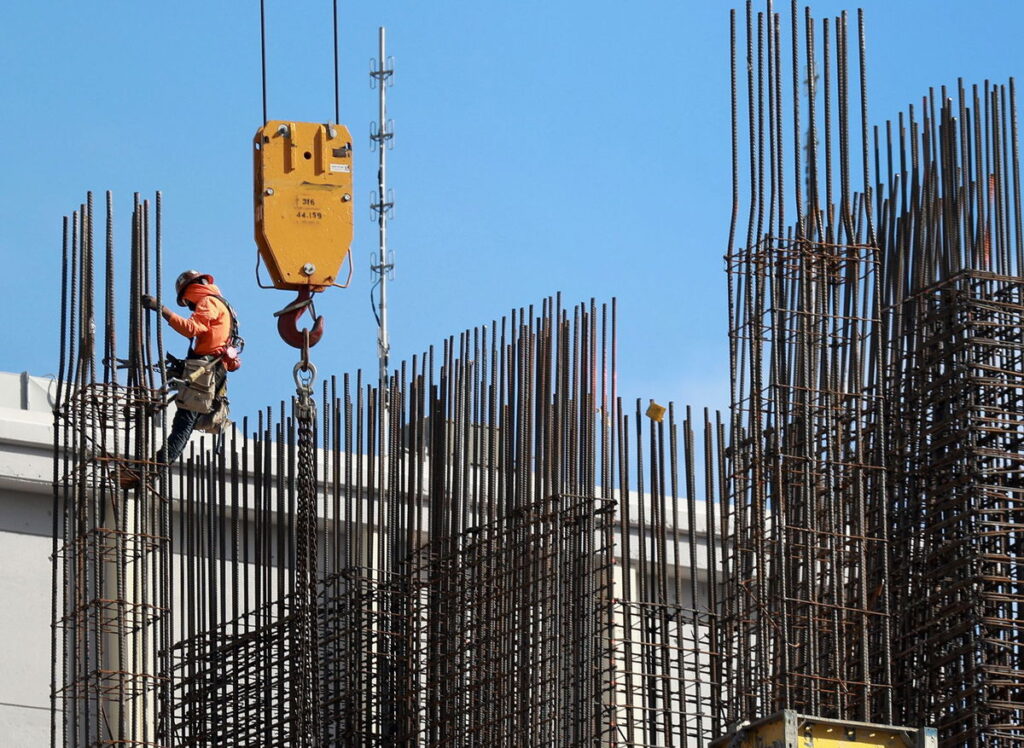
Job growth in tariff-impacted sectors including manufacturing, construction and transportation turned negative shortly after Trump started his trade war this spring, according to a new analysis by Apollo Global chief economist Torsten Slok.
Slok’s research, based on a three-month moving average of Bureau of Labor Statistics data on employment, shows that while tariff-impacted sectors had moments of job loss in recent years, this is the first time payroll growth is negative over a period of several months.
Employment in industries not affected by tariffs continues to increase, albeit at a slower pace than before the trade war.
“The tariff impact on hiring is now undeniable. The manufacturing renaissance, the hiring boom, is just not happening,” Joe Brusuelas, chief economist at RSM, told CNN.
Manufacturing employment has declined four months in a row, according to the August jobs report released last Friday. The US manufacturing industry has 78,000 fewer jobs than it did a year ago, BLS data shows.
Of course, tariffs were never going to dramatically increase manufacturing jobs overnight. It’s too early to say how the strategy will play out in the long run.
Still, some economists say the administration’s chaotic trade strategy is backfiring in at least two ways.
First, it has caused enormous uncertainty that has “paralyzed” manufacturers and other companies in tariff-exposed industries, causing them to pull back on hiring.
Secondly, tariff hikes on steel, aluminum, copper and other key inputs have raised prices for the same US manufacturers that are supposed to be benefiting from the trade agenda.
“It turns out the community of economists were correct that launching a trade war would result in slower growth and few jobs. That’s what is happening,” Brusuelas said.
“The Trump administration has embarked on the most aggressive pro-growth economic agenda in modern history, and our policies of tax cuts and rapid deregulation have already yielded trillions in historic investment commitments to make and hire in America,” White House Spokesman Kush Desai said.