

The American housing market, a cornerstone of the national economy and a primary source of wealth for millions of families, has emerged from the pandemic era fundamentally transformed. The period of near-zero interest rates and frenzied buyer competition has given way to a more complex, nuanced, and challenging environment. For potential homebuyers, sellers, investors, and industry observers, understanding the current dynamics is not just a matter of curiosity—it’s a financial imperative.
This comprehensive check-up delves into the three most critical vital signs of the U.S. housing market: home prices, housing starts, and mortgage rates. We will dissect their current state, explore the intricate relationships between them, and analyze what the converging trends suggest for the future. By moving beyond headline hype and examining the underlying data, we aim to provide a clear, authoritative, and trustworthy guide to navigating one of the most significant financial decisions of a lifetime.
Part 1: The Unyielding Ascent of U.S. Home Prices
Despite a sharp rise in borrowing costs, U.S. home prices have demonstrated remarkable resilience. After a minor correction in late 2022 and early 2023, major indices like the S&P CoreLogic Case-Shiller U.S. National Home Price Index and the Federal Housing Finance Agency (FHFA) House Price Index have not only recovered but surged to new all-time highs.
1.1 The Current State: Defying Gravity
As of mid-2024, the narrative of a looming housing market crash has largely dissipated. Price growth has moderated from the blistering, double-digit annual pace of 2021-2022, but it remains firmly positive. The national median existing-home price has consistently climbed, reflecting a market where demand continues to outstrip supply.
This price persistence is confounding to many, as conventional wisdom dictates that higher mortgage rates should depress buyer demand and, consequently, prices. The fact that the opposite has occurred signals a profound shift in market fundamentals.
1.2 The Anatomy of Resilience: Why Prices Remain High
Several powerful factors are insulating home prices from downward pressure:
- The Great Lock-In Effect: The most significant factor is the historically low mortgage rates secured by existing homeowners during the 2020-2021 period. With over 80% of outstanding mortgages having rates below 5%—and a vast majority below 4%—the financial disincentive to sell is immense. Trading a 3% mortgage for a new one at 6.5% or higher would mean a dramatic increase in monthly payments for the same-priced home. This has frozen a large portion of the existing housing stock, severely limiting the supply of resale homes.
- Chronic Underbuilding: The U.S. has been underbuilding housing for more than a decade, a legacy of the 2008 financial crisis. The construction industry lost a significant portion of its workforce and capacity, and it has never fully recovered to pre-2008 levels. This long-term supply deficit, estimated to be in the millions of units, created a structural shortage that the pandemic-era demand surge only exacerbated.
- Demographic Tailwinds: The largest generational cohort in U.S. history, the Millennials, is now firmly in its prime home-buying years (ages 30-45). This demographic bulge represents a powerful, sustained source of demand for starter homes and trade-up properties, providing a solid floor under prices.
- The Shift to Remote Work: The widespread adoption of remote and hybrid work models has permanently altered housing preferences. The “race for space” continues, with demand shifting towards suburbs and smaller metropolitan areas that offer more square footage and amenities for the price. This has also injected new demand into markets that were previously more affordable, elevating prices nationwide.
- Institutional Investment: While sometimes overemphasized, the role of institutional investors who purchased single-family homes to operate as rentals cannot be ignored. This activity removes a segment of for-sale inventory from the market, contributing to supply constraints and adding a new layer of competition for individual buyers.
Part 2: Housing Starts – The Supply Side Conundrum
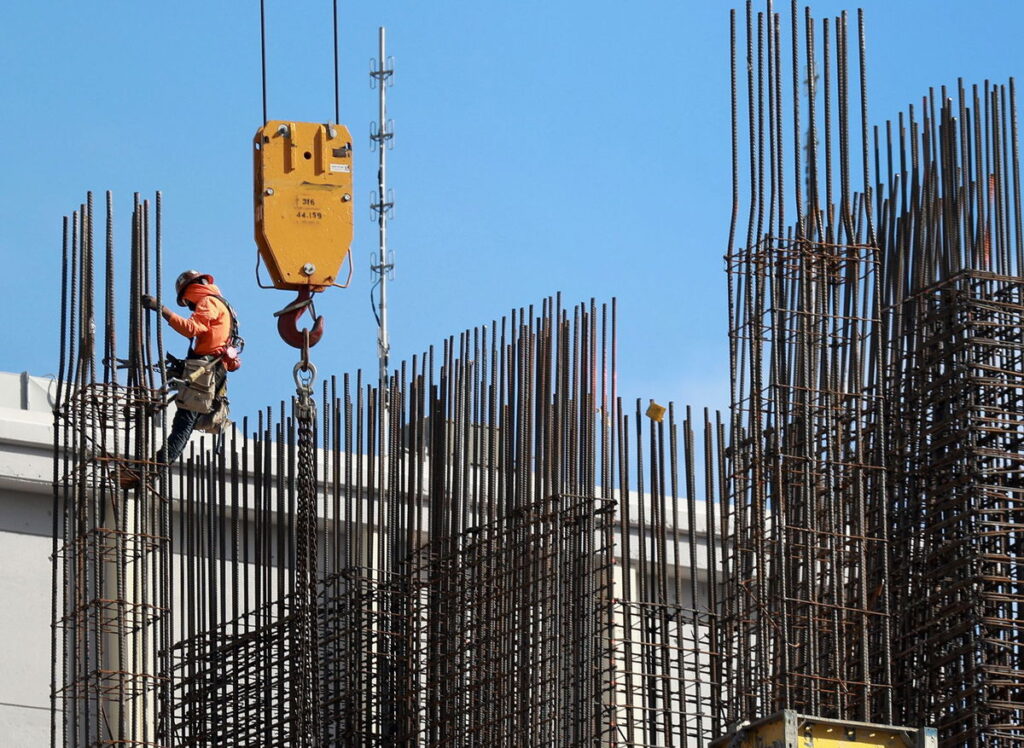
Housing starts—the number of new residential construction projects on which ground has been broken—are a critical leading indicator of future housing supply. The health of this sector is paramount to solving the affordability crisis.
2.1 A Cautious Recovery Amidst Headwinds
After a post-pandemic surge, housing starts have been volatile. Single-family starts, which are most relevant to the typical homebuyer, have shown modest improvement but remain constrained. The primary challenge for builders is the same as for everyone else: high interest rates.
- Builder Financing: The cost of construction loans has risen significantly, making new development projects more expensive to finance.
- Input Costs and Labor: While lumber prices have retreated from their stratospheric peaks, they remain volatile. Furthermore, persistent shortages of skilled labor and ongoing supply chain issues for appliances and building materials continue to pressure builders’ budgets and timelines.
2.2 The Builder’s Response: Buying Down Rates and Building Smaller
Faced with a market where buyers are squeezed by high mortgage rates, homebuilders have proven to be more agile than the resale market. Their primary strategy has been aggressive use of mortgage rate buydowns.
It is now commonplace for major builders to offer incentives that temporarily or permanently reduce a buyer’s mortgage rate, often bringing it down to the 5% range. This tactic effectively lowers the monthly payment without lowering the home’s sticker price, allowing builders to move inventory while protecting their profit margins.
Additionally, there is a noticeable trend towards building smaller, more affordable homes. After years of focusing on larger, higher-margin luxury properties, builders are increasingly designing “attainable” product lines with reduced square footage and fewer high-end finishes to meet the budget realities of first-time buyers.
2.3 The Multifamily Wave: A Glimmer of Hope for Renters
While single-family starts are muted, multifamily construction (apartments and condos) has been booming. A massive wave of new apartment units is currently coming online. This influx of supply is already beginning to cool rent growth in many metropolitan areas, providing relief for renters. Over the long term, increased multifamily construction helps ease overall housing pressure, but it does little to address the immediate shortage of for-sale single-family homes.
Part 3: Mortgage Rates – The Market’s Heartbeat
If home prices are the market’s temperature and housing starts are its pulse, then mortgage rates are its heartbeat—the fundamental force that drives circulation and activity. The era of “free money” is unequivocally over.
3.1 The “Higher for Longer” Paradigm
The 30-year fixed-rate mortgage, the most common home loan in the U.S., has settled into a range between 6.5% and 7.5% as of mid-2024, a level not seen since the early 2000s. This shift is a direct result of the Federal Reserve’s aggressive monetary tightening campaign to combat inflation.
The key takeaway from economists and Fed officials is the concept of “higher for longer.” Markets have adjusted to the reality that the ultra-low rates of the previous decade were an anomaly and are unlikely to return in the foreseeable future. The new normal is a rate environment that is higher than what recent buyers are accustomed to but is, in fact, much closer to the historical average.
3.2 The Psychological and Financial Impact on Buyers
The psychological shock of seeing a 3% rate become a 7% rate cannot be overstated. For a buyer with a $500,000 loan:
- At a 3% rate, the principal and interest payment is approximately $2,108.
- At a 7% rate, that payment jumps to $3,327.
This represents a 58% increase in the monthly housing cost for the same loan amount. This math has fundamentally reshaped buyer behavior:
- Affordability Crisis: Many first-time buyers are simply priced out of the market.
- Budget Recalibration: Those who can still buy are looking at lower-priced homes, compromising on location, size, or condition to make the numbers work.
- The “Golden Handcuff” Effect: As mentioned, this rate shock is the very engine of the “lock-in effect,” trapping existing homeowners in their current homes.
3.3 The Path Forward for Rates
The future trajectory of mortgage rates is inextricably linked to the Federal Reserve’s policy on the federal funds rate. While mortgage rates are not directly set by the Fed, they are heavily influenced by the yield on the 10-year Treasury note, which in turn reacts to Fed policy and inflation expectations.
Most forecasts suggest that mortgage rates will gradually decline as inflation shows sustained signs of cooling, but the descent will be slow and potentially bumpy. A return to sub-5% rates in the near term is considered highly unlikely by most credible financial institutions.
Part 4: Synthesis – The Standoff and Potential Outcomes
When we synthesize these three factors, the picture that emerges is one of a historic standoff.
- Sellers are largely staying put, enjoying their low-rate mortgages.
- Builders are building, but not fast enough to meet demand, and they are using incentives to avoid cutting prices.
- Buyers are on the sidelines, frustrated by high prices and even higher financing costs.
This has led to a dramatic freeze in transaction volume. Existing-home sales have plummeted to levels not seen since the Great Recession. The market is in a state of low-volume equilibrium, where the few transactions that do occur are enough to keep prices aloft due to the extreme scarcity of available homes.
Potential Future Scenarios:
- The Slow Thaw (Most Likely): Mortgage rates slowly descend to the 5.5-6.5% range. This provides just enough relief to entice some “on-the-fence” buyers and a small number of homeowners with a pressing need to sell (due to life events like job changes or family growth). Transaction volume picks up gradually, but price growth remains modest due to the continued affordability ceiling.
- The Recessionary Shock: If the economy enters a significant recession, job losses could force a wave of distressed sales, breaking the lock-in effect. This would increase supply while demand plummets, likely leading to price corrections, particularly in the most overvalued markets.
- The Stagnation Persists: If inflation proves stickier than expected, forcing the Fed to maintain high rates for an extended period, the current standoff could continue for years. The market would remain frozen, with affordability remaining the primary barrier to entry for a generation of would-be homeowners.
Part 5: Strategic Advice for Buyers, Sellers, and Investors
In this challenging environment, a strategic, informed approach is essential.
For Prospective Homebuyers:
- Focus on Monthly Payment, Not Just the Price: Use mortgage calculators to understand what you can truly afford each month. Let that payment guide your search price.
- Get Creative with Builder Incentives: If you are flexible on location, explore new construction and aggressively negotiate for rate buydowns and other closing cost incentives.
- Expand Your Geographic Search: Consider emerging suburbs or smaller cities where you may get more value for your money.
- Improve Your Financial Profile: Use this time of waiting to pay down debt, increase your savings for a larger down payment, and improve your credit score. A higher credit score can qualify you for a slightly lower rate, saving you tens of thousands over the life of the loan.
- Be Patient but Prepared: The right home may take longer to find. Have your financing pre-approved and be ready to move quickly if you find a property that meets your needs and budget.
Read more: Bond Market Blues: Why Treasury Yields are the Key to Understanding Equity Volatility
For Homeowners Considering Selling:
- Weigh the Mortgage Math Carefully: Before listing, run the numbers on what your new monthly payment would be for your next home. The “trade-up” may no longer be financially feasible.
- Understand Your Unique Leverage: If you must sell, remember that you will be one of the few listings in your area. In a market with scant inventory, a well-priced, desirable home can still attract multiple buyers and sell quickly.
- Consider Creative Concessions: You can mimic builders by offering to buy down your buyer’s mortgage rate as a seller concession. This can make your home more attractive than competing listings.
For Real Estate Investors:
- Shift Expectations: The era of easy appreciation fueled by cheap debt is over. Focus on fundamentals: cash flow, long-term hold strategies, and value-add opportunities in markets with strong demographic and job growth.
- Due Diligence is Paramount: Underwrite deals conservatively, assuming current interest rates and factoring in potential economic headwinds.
Conclusion: A Market in Transition
The U.S. housing market is undergoing a painful but necessary correction from the excesses of the zero-rate era. The trifecta of stubbornly high prices, constrained new supply, and elevated mortgage rates has created a uniquely challenging landscape.
The path to a more balanced market lies in a sustained increase in housing supply—both for-sale and for-rent—and a gradual moderation of financing costs. There are no quick fixes. For now, participants must shed the expectations of the recent past and adapt to the new realities of cost, scarcity, and value.
The American dream of homeownership is not dead, but it has been deferred and redefined. Success in this new market will require more financial preparation, strategic flexibility, and patience than at any time in the last two decades. By understanding the deep-seated forces at play, you can make informed, confident decisions, whether you are buying your first home, selling your longtime residence, or simply observing one of the most critical sectors of the American economy.
Read more: The Week in Charts: 5 Visuals That Explain Everything in US Markets
Frequently Asked Questions (FAQ)
Q1: Why are home prices still so high when mortgage rates have skyrocketed?
This is the central paradox of the current market. The primary reason is the “lock-in effect.” The vast majority of existing homeowners have fixed-rate mortgages below 4% or 5%. Selling their home would mean giving up that low rate and taking on a new mortgage at 6.5%+, drastically increasing their monthly payment for a similar home. This has caused a severe shortage of existing homes for sale. With demand still outpacing this limited supply, prices remain high.
Q2: Will there be a housing market crash in 2024 or 2025?
Most mainstream economists and housing analysts do not forecast a nationwide crash akin to 2008. The fundamentals are very different. Today’s market is characterized by strict lending standards (no subprime crisis), a massive housing undersupply, and homeowners with significant equity and stable mortgages. While some overvalued markets could see price corrections, a systemic, nationwide crash is considered unlikely. A period of stagnation or very modest price declines is a more probable scenario.
Q3: When will mortgage rates go down?
Mortgage rates are expected to gradually decline as inflation continues to fall and the Federal Reserve becomes confident enough to begin cutting its benchmark interest rate. However, the timeline is uncertain. Most forecasts suggest a slow descent, potentially into the 5-6% range by the end of 2025. A return to the 2-3% rates seen during the pandemic is highly improbable in the foreseeable future.
Q4: Is now a good time to buy a house, or should I wait?
There is no one-size-fits-all answer, as it depends heavily on your personal financial situation, life stage, and local market conditions.
- If you find a home you love, can truly afford the monthly payment (including taxes and insurance), and plan to live there for at least 5-7 years, it can still be a good time to buy. You are purchasing a place to live and build a life, and you can always refinance if rates drop in the future.
- If you are stretching your budget to the absolute limit or are unsure about your job security, it may be prudent to wait, save more for a down payment, and hope for slightly better rates or more inventory in the future. Timing the market perfectly is nearly impossible.
Q5: What is a mortgage rate buydown, and how does it work?
A mortgage rate buydown is a financial incentive where the seller (often a homebuilder) pays an upfront sum to the lender to temporarily or permanently reduce the buyer’s mortgage interest rate. The most common type is a “2-1 buydown,” where the interest rate is reduced by 2% in the first year and 1% in the second year, before reverting to the original note rate for the remainder of the loan. This makes the home more affordable in the critical early years of ownership.
Q6: How does the construction of new apartments help the housing market for buyers?
While new apartments don’t directly add to the supply of for-sale homes, they play a crucial role in the overall housing ecosystem. A large influx of new rental units increases competition among landlords, which helps to slow down or even reverse rent growth. This provides financial relief for renters, allowing them to save more money for a future down payment. It also reduces the pressure on renters to buy a home out of desperation, which can help moderate buyer demand over time.