
The American economic landscape of the post-pandemic era has been defined by a word many hadn’t uttered in decades: inflation. From the gas pump to the grocery store, the rising cost of living has squeezed household budgets and dominated political and financial discourse. As prices climbed, so too did demands for higher wages to keep pace. This, in turn, led to a haunting question from economists and policymakers: Have we inadvertently awakened the ghost of the 1970s? Are we stuck in a dreaded wage-price spiral?
This article delves deep into this complex economic phenomenon. We will dissect its mechanics, analyze the current U.S. economic data through the lens of this theory, and present arguments from leading economists on both sides of the debate. Our goal is not to incite panic but to provide a clear, authoritative, and nuanced understanding of the forces at play, separating economic reality from political rhetoric and media sensationalism.
Understanding the Beast: What is a Wage-Price Spiral?
At its core, a wage-price spiral is a self-reinforcing cycle of economic feedback. It’s a classic chicken-and-egg problem where it becomes difficult to determine which came first: rising wages or rising prices. The spiral operates on a simple, yet powerful, logic:
- The Initial Spark: The cycle often begins with an external shock that drives up prices. This could be a surge in energy costs (like the 1970s oil embargo), supply chain disruptions (like the post-pandemic bottlenecks), or a massive burst of fiscal and monetary stimulus that overheats demand.
- The Price-to-Wage Link: As the cost of living rises, workers find their purchasing power eroding. They respond by demanding higher wages to maintain their standard of living. In a tight labor market—where employers are desperate to attract and retain talent—they are often successful.
- The Wage-to-Price Link: Businesses now face higher labor costs. To protect their profit margins, they pass these increased costs on to consumers in the form of higher prices for goods and services.
- The Spiral Begins: These new, higher prices once again erode the real value of workers’ wages, leading to renewed demands for pay raises. The cycle repeats, creating a persistent and accelerating inflationary loop that can be difficult to break.
The textbook example is the United States in the 1970s. A combination of loose monetary policy, massive fiscal spending (on the Vietnam War and Great Society programs), and two major oil shocks sent inflation soaring. As prices rose, powerful labor unions secured large cost-of-living adjustments (COLAs) in their contracts. Businesses, facing higher costs for both energy and labor, raised prices further. By the end of the decade, the U.S. was grappling with “stagflation”—the toxic combination of high inflation and high unemployment, which confounded traditional economic models.
The 2020s Crucible: A Perfect Storm for Inflationary Fears
The current inflationary episode did not emerge from a vacuum. It was born from a historic convergence of factors that created a fertile ground for wage-price spiral concerns.
- Unprecedented Fiscal Stimulus: In response to the COVID-19 pandemic, the U.S. government unleashed trillions of dollars in relief through programs like the CARES Act and the American Rescue Plan. This successfully averted a deep depression but also flooded the economy with cash, boosting demand for goods at a time when supply was constrained.
- Supply Chain Carnage: Factory shutdowns, port congestion, and a global shipping crisis created severe shortages of everything from semiconductors to furniture. The basic laws of supply and demand took over: with too many dollars chasing too few goods, prices skyrocketed.
- The Great Resignation and a Tight Labor Market: The pandemic triggered a profound reassessment of work. Millions retired early, switched careers, or simply left the workforce. The resulting labor shortage gave workers unprecedented leverage, leading to a surge in wages, particularly in leisure, hospitality, and retail. The Employment Cost Index (ECI), a key measure watched by the Federal Reserve, saw its highest growth rates in decades.
- The Ukraine War and Energy Shock: Russia’s invasion of Ukraine sent shockwaves through global energy and food markets, pushing the prices of oil, natural gas, wheat, and fertilizer to multi-year highs. This acted as a brutal tax on consumers and a new cost-push inflationary driver for businesses.
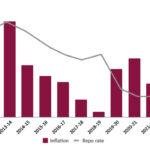
With these factors in play, the conditions for a wage-price spiral seemed to be falling into place. Headline inflation, as measured by the Consumer Price Index (CPI), peaked at 9.1% in June 2022—a 40-year high. Wages were growing at a rapid clip of 5-6% annually. The fear was that these two trends would become locked in a destructive dance.
The Great Debate: Are We in a Spiral or Not?
This is the multi-trillion-dollar question. The economic community is divided, with compelling data and arguments on both sides.
The Case FOR a Wage-Price Spiral
Proponents of this view point to several key indicators and narratives:
- The “Atlanta Fed Wage Growth Tracker”: This metric, which tracks the median wage growth of individuals, remained stubbornly high throughout 2022 and 2023, often hovering around 6-7%. This was significantly above the Fed’s 2% inflation target, suggesting that wage growth was not cooling in line with price inflation, potentially fueling future price increases.
- Corporate Earnings Calls: Throughout 2022 and into 2023, many major corporations explicitly stated on investor calls that they had the “pricing power” to pass higher labor and input costs on to consumers without significantly denting demand. This is a direct manifestation of the wage-to-price link in the spiral model.
- Sticky Inflation: While “headline” inflation (which includes volatile food and energy prices) fell rapidly from its peak, “core” inflation (which excludes food and energy) proved much more persistent. This core measure is heavily influenced by service prices, which are intensely labor-dependent. The stickiness of core inflation was seen as evidence that rising wages in the services sector were keeping inflation alive.
- Inflationary Psychology: Perhaps the most feared element is a shift in public mindset. If consumers and businesses begin to expect high inflation to continue, they will act in ways that make it a reality. Workers will demand larger raises, and businesses will preemptively raise prices, embedding inflation into the economic system.
The Case AGAINST a Wage-Price Spiral
A larger and increasingly confident cohort of economists argues that the U.S. is not in a 1970s-style spiral. They contend that while the conditions were present, the dynamics of the modern economy and the Fed’s aggressive actions have prevented a true feedback loop from taking hold. Their evidence is equally compelling:
- Real Wages are the True Measure: The critical metric is not nominal wage growth, but real wage growth—wages adjusted for inflation. For most of 2021, 2022, and part of 2023, real wage growth was negative. Prices were rising faster than paychecks. A genuine wage-price spiral requires real wages to be driving prices, not workers just trying to catch up to inflation they’ve already endured. It wasn’t until mid-2023 that real wage growth turned positive, and by then, inflation was already in sharp decline.
- The Decline of Union Power: The U.S. economy of the 2020s is structurally different from the 1970s. Union membership has plummeted. In the 1970s, over 20% of workers were unionized; today, it’s around 10%. This means there are far fewer workers with the collective bargaining power to automatically secure economy-wide cost-of-living adjustments, which were a primary fuel for the 1970s spiral.
- Anchored Inflation Expectations: This is the Fed’s secret weapon. In the 1970s, the public had lost all faith in the Federal Reserve’s ability to control inflation. Today, despite recent highs, long-term inflation expectations have remained remarkably “anchored” around the Fed’s 2% target. This credibility, earned by decades of successful inflation control, prevents a psychological shift that is essential for a runaway spiral.
- Aggressive Monetary Policy: Unlike the hesitant Fed of the 1970s, Chair Jerome Powell’s Fed embarked on the most rapid interest rate hiking cycle since the early 1980s. By raising the federal funds rate from near-zero to over 5.25%, the Fed deliberately cooled the economy, dampened demand, and loosened the labor market. This directly attacks the mechanism of the spiral by reducing both the ability of businesses to raise prices and the leverage of workers to demand large raises.
- Profit-Led Inflation vs. Wage-Led Inflation: A significant body of analysis suggests that the initial burst of inflation was driven more by soaring corporate profits than by labor costs. Companies, facing unprecedented demand and limited supply, were able to expand their profit margins significantly. As the economy has normalized and competition has increased, this “greedflation” or profit-led inflation has subsided, breaking one of the key links in the spiral chain.
The Federal Reserve’s Tightrope Walk
The Federal Reserve’s task is unenviable. Its dual mandate is to achieve maximum employment and stable prices. To crush inflation, it must slow the economy and weaken the labor market—a process that inherently risks causing a recession and job losses.
The Fed’s primary strategy has been to focus on the labor market. By raising interest rates, they make it more expensive for businesses to borrow and invest. This cools hiring, reduces job openings, and, in theory, moderates wage growth. The goal is not to create mass unemployment but to bring the labor market back into “balance.”
The Fed watches the ratio of job openings to unemployed people closely. At the peak, there were nearly two openings for every unemployed person. This extreme imbalance gave workers immense power. The Fed’s hikes have successfully brought this ratio down, easing wage pressures without (so far) causing a sharp rise in unemployment—a scenario often called a “soft landing.”
Read more: The Fed’s Balancing Act: Can It Tame Inflation Without Triggering a Recession?
Beyond the Headlines: A More Nuanced Reality
The binary question of “spiral or not?” may be too simplistic. The reality is likely a hybrid model where different sectors of the economy behave differently.
- The Goods Sector: Here, inflation has fallen most dramatically. The resolution of supply chain snarls, a shift in consumer spending from goods back to services, and the impact of higher interest rates on big-ticket purchases like cars and appliances have brought price increases in this sector down to near-normal levels.
- The Services Sector (Ex-Shelter): This is the Fed’s primary battleground now. Inflation in services like healthcare, education, and hospitality is more stubborn because it is so directly tied to wages. The continued strength in the labor market is why services inflation has been the last to budge.
- Shelter/Housing: This has been a major component of CPI. However, there is a significant lag. Real-time data on new rental leases shows a dramatic cooling in rent growth, but this takes 6-12 months to fully filter into the official CPI data. This lag has made core inflation appear stickier than it likely is in real-time.
Conclusion: Navigating the Loop Without Getting Stuck
So, is the U.S. economy stuck in a wage-price spiral? The preponderance of evidence suggests no, not in the classic, self-sustaining sense of the 1970s.
The U.S. experienced a severe inflationary shock driven by a unique cocktail of pandemic-related factors. This inevitably led to a period of high nominal wage growth as workers struggled to catch up. However, the feedback loop between wages and prices never fully synchronized into a true spiral. Key structural differences—most notably the Fed’s credibility, the lack of widespread unionization, and the fact that real wages were falling for a prolonged period—prevented it.
The aggressive medicine of interest rate hikes, while painful, appears to be working. Inflation has fallen significantly from its peak without a major spike in unemployment (so far). The economy is slowing, and the labor market is cooling, but it remains resilient.
The risk of a spiral is not zero, and the Fed remains vigilant. A premature declaration of victory or a sudden external shock could still re-ignite inflationary pressures. However, the current trajectory points towards an economy that passed through a dangerous inflationary episode and is now, cautiously, navigating its way out. The feedback loop was activated, but the circuit breakers—primarily a determined Federal Reserve—were strong enough to prevent the system from overloading.
The ghost of the 1970s has been summoned, but it has not yet taken residence.
Read more: The Debt and Deficit Dilemma: An Update on the U.S. Federal Budget
Frequently Asked Questions (FAQ)
1. What’s the difference between inflation and a wage-price spiral?
Inflation is a general increase in the overall price level of goods and services in an economy. A wage-price spiral is a specific, self-reinforcing cause of persistent inflation. All wage-price spirals involve inflation, but not all inflation is due to a wage-price spiral. Inflation can be caused by one-off events like supply shocks, while a spiral is a cyclical process that is much harder to stop.
2. If my boss gives me a 5% raise, am I fueling inflation?
Not necessarily on your own. The spiral is a macroeconomic, economy-wide phenomenon. It occurs when wage growth across the entire economy consistently outpaces productivity growth and becomes embedded in business costs and consumer expectations. An individual raise is a microeconomic event. However, if every employer is simultaneously giving 5-6% raises while productivity is only growing at 1-2%, that collective action would indeed be fuel for inflationary pressures.
3. Why is the Federal Reserve so focused on the labor market and wages?
Because labor costs are the single largest expense for most businesses in the service-based U.S. economy. If wages are rising rapidly, businesses feel pressure to raise prices to cover those costs, and consumers with higher incomes can afford to pay those higher prices. By cooling the labor market, the Fed aims to reduce the pace of wage growth, thereby removing a key source of potential future inflation, particularly in the services sector.
4. Was “greedflation” a real cause of inflation?
This is a hotly debated topic. There is clear data showing that corporate profit margins expanded significantly during the initial phase of high inflation in 2021. Companies with strong pricing power were able to raise prices by more than their increased costs, boosting profits. This suggests that corporate pricing decisions played a role, alongside supply shocks and demand surges. However, most economists see it as one contributing factor among many rather than the sole cause. As competition and supply have normalized, the ability of firms to maintain these elevated margins has diminished.
5. What can break a wage-price spiral once it starts?
Historically, only a determined and often painful policy intervention can break a deeply entrenched spiral. This typically involves the central bank (the Federal Reserve) raising interest rates aggressively—potentially to levels that induce a recession. By making borrowing prohibitively expensive, the central bank crushes demand, leads to higher unemployment, and fundamentally breaks the cycle of rising wages and prices. The social cost is high, as seen in the early 1980s recessions, but it is considered the necessary price to restore price stability.
6. How can I protect my finances in this kind of economic environment?
- Investing: Consider assets that historically perform well during inflationary periods, such as Treasury Inflation-Protected Securities (TIPS), real estate, and stocks of companies with strong pricing power. However, always consult a financial advisor.
- Debt Management: If you have fixed-rate debt like a 30-year mortgage, high inflation can actually be beneficial, as you repay the loan with dollars that are worth less. Variable-rate debt, however, becomes more expensive as interest rates rise.
- Career: In a tight labor market, it’s a good time to seek skills development, certifications, or explore new opportunities to advance your career and increase your income.
- Budgeting: Focus on a detailed budget to track spending, identify areas to cut back, and build an emergency fund to weather potential economic uncertainty.